
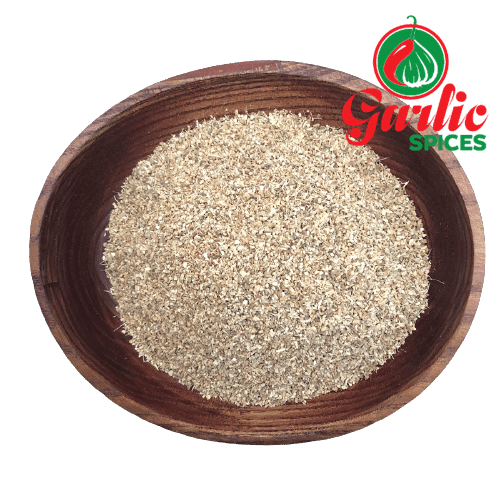
Ginger granules or granulated ginger are further processed granulated form of dehydrated ginger flakes.
Ginger Granules 8-16 mesh, 16-26 mesh, 26-40 mesh, 40-60 mesh.
They are available in more size options compared with dehydrated ginger whole and dried ginger flakes.
Furthermore, its moisture is lower and smells more pungent.
| Name | Ginger Granules, granulated ginger |
| Appearance | Natural color and smell with ginger flavour |
| Particle Size | 8-16 mesh, 16-26 mesh, 26-40 mesh, 40-60 mesh |
| Moisture | 6.8% max |
| SO2 | 30ppm max |
| Ash | 3.30% max |
| Mould and Yeast | 100cfu/g max |
| Standard Plate Count | 0.65 x 10⁵ cfu/g max |
| Total Coliforms | 100mpn/g |
| E.Coli | Negative/25g |
| Salmonella | Negative/25g |
| Shelf life | 2 years |
Packing and Delivery
- Inner packing: Aluminum foil bag * 2 (12.5kg/bag)
- Outer packing: 25KG carton
- Loading: 14.0MT/20’FCL
- Delivery time: within 10-15 working days after get the deposit.
Everything You Need to Know About Dehydrated Ginger Granules
What are the benefits of ginger granules?
Ginger granules offer concentrated ginger flavor and potential health benefits. Gingerols and shogaols in ginger are known for anti-inflammatory properties, potentially aiding digestion and nausea relief, although more research is needed. Ginger granules have a longer shelf life than fresh ginger, maintaining flavor for culinary uses, teas, and health supplements.
How to make ginger granules?
To make ginger granules, start by washing and peeling fresh ginger root. Slice the ginger thinly into uniform pieces, ideally about 1/8 inch thick. Arrange the slices in a single layer on dehydrator trays or parchment-lined baking sheets. Dehydrate at a low temperature, around 105°F to 140°F (40°C to 60°C), for approximately 4 to 6 hours until the ginger is completely dry and crisp. Once dried, grind the ginger slices into granules using a spice grinder or mortar and pestle. Store the ginger granules in an airtight container away from light and moisture for extended shelf life.
How do you use granulated ginger?
Ground ginger is versatile, enhancing both sweet and savory dishes. It adds warm spice to baked goods like gingerbread and cookies, flavors stir-fries and curries, and infuses beverages like ginger tea and spiced lattes with a distinctive kick.
How much dried ginger should I use in cooking?
As a general rule in cooking, use about 1/4 to 1/2 teaspoon of dried ginger granules in place of one tablespoon of fresh grated ginger. For soups, stews, and marinades, start with 1/2 teaspoon per serving and adjust to taste, as dried ginger is more concentrated than fresh. In baking, most recipes call for 1/2 to 1 teaspoon of ginger granules per batch. Remember that dried ginger releases its flavor gradually when heated, so it works best added early in the cooking process. Store your ginger granules in an airtight container away from light and heat to keep their pungent flavor for up to two years.
What is the global market for dehydrated ginger?
The global market for dehydrated ginger products can be analyzed from several perspectives:
1. Production and Supply
- Major Producers: The Asia-Pacific region dominates the global dehydrated ginger market, particularly China, India, Indonesia, and Nepal. These countries are major production hubs due to favorable climate conditions and advanced agricultural techniques (HTF MI) (Business Wire).
- Production Conditions: The tropical and subtropical climates in these countries provide ideal conditions for ginger cultivation, resulting in high yield and quality of ginger (Business Wire).
2. Market Demand
- Major Importers: Europe is the largest market for ginger imports, with significant demand from countries like Germany, the Netherlands, and the United Kingdom. The United States, Japan, and Canada also show increasing demand (Tridge) (Business Wire).
- Consumption Trends: The growing focus on healthy eating has increased demand for ginger as a health food and natural remedy. It is widely used in the food, pharmaceutical, and cosmetic industries (IMARC) (Business Wire).
3. Economic and Trade
- Trade Volume and Value: China is the largest exporter of dehydrated ginger, followed by countries such as the Netherlands, Thailand, India, and Peru. Export volumes and values from these countries have been rising, reflecting strong demand and economic value in the market (Business Wire).
- Market Share: The Asia-Pacific region holds the largest share in both production and consumption, dominating the global ginger market (HTF MI).
4. Product Types and Applications
- Product Variety: Dehydrated ginger products include dried ginger slices, ginger powder, and ginger oil. These products are popular for their long shelf life and convenience, catering to diverse needs in the food processing, pharmaceutical, health supplement, and cosmetic industries (IMARC) (Business Wire).
- Applications: The antibacterial, anti-inflammatory, and antioxidant properties of ginger make it widely used in food and medicine. Its usage in cosmetics is also growing (IMARC) (Business Wire).
5. Market Challenges
- Quality Standards: The international market demands high-quality standards for dehydrated ginger products. Producers need to ensure that their products meet the quality and safety standards of importing countries, which imposes strict requirements on the supply chain and production processes (Business Wire).
- Price Volatility: Ginger prices are influenced by climate conditions, market demand, and production costs, leading to frequent price fluctuations. This presents economic risks for producers and traders (HTF MI).


