Introduction
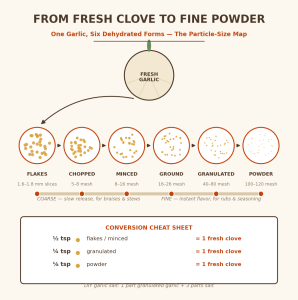
Dehydrated garlic products, including garlic powder, garlic granules, and garlic flakes, are essential ingredients in the food industry due to their long shelf life, concentrated flavor, and ease of use. This paper outlines the detailed manufacturing process for each of these products, emphasizing the steps taken to ensure quality and consistency. The process is designed to be efficient, hygienic, and scalable, suitable for large-scale production in a modern food processing facility.


Raw Material Selection
Cleaning and Peeling
Slicing
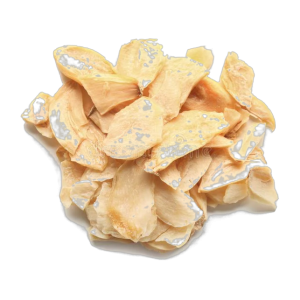
For garlic flakes, the cleaned and peeled garlic cloves are sliced into thin pieces, usually between 1 to 3 millimeters thick. The thickness of the slices can be adjusted depending on the desired final product. This step is crucial because uniform slicing ensures even drying, which is important for maintaining quality and consistency.
Drying
The sliced garlic is then subjected to the drying process, which is the most critical step in the production of all dehydrated garlic products. There are several drying methods, including:
Air Drying: The garlic slices are spread out on trays and exposed to hot air in a controlled environment. The temperature is usually maintained between 50°C to 60°C (122°F to 140°F) to prevent the loss of essential oils while effectively removing moisture.
Spray Drying: This method is more common for producing garlic powder. The garlic is first ground into a slurry and then sprayed into a chamber with hot air, where it quickly dries into a fine powder.
Freeze Drying: For high-end products, freeze drying may be used. This method preserves the most flavor and nutrients by freezing the garlic and then reducing the surrounding pressure to allow the frozen water in the garlic to sublimate directly from solid to gas.
The drying process typically reduces the moisture content of the garlic to below 6%, which is necessary to inhibit microbial growth and extend shelf life.
Grinding (For Garlic Powder and Granules)
After drying, the garlic slices intended for garlic powder and granules undergo further processing.
Grinding for Garlic Powder: The dried garlic slices are ground into a fine powder using high-speed grinders. The powder is then sieved to ensure uniform particle size and remove any large or irregular pieces.
Grinding for Garlic Granules: To produce garlic granules, the dried garlic slices are ground more coarsely. The resulting product is screened to achieve a consistent granule size, typically between 0.5 to 1.5 millimeters in diameter.
Sieving and Screening
For all dehydrated garlic products, sieving and screening are essential steps to ensure uniformity. This process involves passing the product through a series of screens to separate fine particles from larger ones. The aim is to achieve the desired consistency and particle size distribution, which is critical for meeting industry standards and customer specifications.
Blending (Optional)
In some cases, the garlic powder or granules may be blended to achieve a specific flavor profile or consistency. Blending is also used to mix garlic with other spices or additives if the final product requires it. This step must be done in a controlled environment to prevent contamination and ensure a homogeneous mixture.
Packaging
Once the garlic products have reached the desired specifications, they are packaged in airtight containers to preserve freshness and prevent contamination. The packaging material is usually food-grade and moisture-proof, often consisting of plastic, glass, or aluminum foil pouches. The packaging process is automated in most modern facilities to ensure efficiency and consistency.
Quality Control
Throughout the production process, strict quality control measures are implemented to ensure that the final products meet industry standards. This includes regular testing for moisture content, particle size, flavor, and microbiological contamination. Quality control also involves traceability procedures, where samples from each batch are retained for future reference and testing.
Storage and Distribution
Finally, the packaged garlic products are stored in a cool, dry environment before being distributed to customers. Proper storage is essential to maintain the quality of dehydrated garlic products, as exposure to moisture or light can degrade the product over time.
Conclusion
The production of dehydrated garlic products, including garlic powder, garlic granules, and garlic flakes, involves a series of well-coordinated steps designed to ensure high quality and consistency. From raw material selection to packaging, each stage of the process is optimized for efficiency and adherence to food safety standards. As the demand for convenient and long-lasting garlic products continues to grow, manufacturers must maintain rigorous standards to meet the needs of the global market.