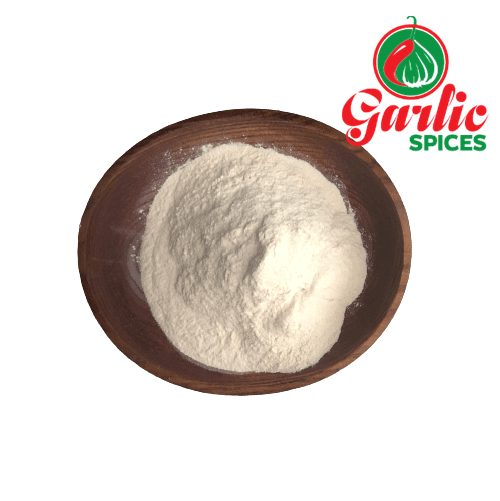
Dehydrated Garlic powder or dried garlic powder are ground from China dehydrated garlic.
Dehydrated garlic powder is ground from garlic flakes or dehydrated garlic granules. Garlic powder is a commonly used condiment with global presence culture and cuisine. Dried garlic powder usually mixed with salt, pepper or lemon to acquire a complex taste or compound function, working as an excellent rub for meat products as well for vegetables.China Dried garlic powder is widely used for its pungent garlic flavor and aroma as a seasoning or condiment.
Garlic Powder Equals One Clove Of Garlic
Dehydrated garlic powder quality and processing
Dehydrated garlic powder is made from China garlic flakes or garlic granules. The dried garlic flakes are put into a pulverizer and ground into dried garlic powder and passed through a sieve to obtain 80-100 mesh garlic powder.
- All raw fresh garlic comes from our own planting base.
- A fast pesticide inspection will be done on the incoming garlic bulbs
- several major steps are followed then Split peeling, Rinsing, Drying, Slicing, Steam Sterilizing, Selecting and Metal Detecting.
Organic garlic powder is an ingredient which can be used for most recipes. Whatever the dish or meal, Organic garlic powder compliments it perfectly, blending seamlessly with other spices and seasoning mixes
What Kind of dried garlic powder products we can supply
Dehydrated Garlic Powder 80-100 mesh can be used for food grade and feed grade for horses, cattle, sheep, goats, pigs, poultry. China bulk Garlic powder for the horse. We also supply dried chopped garlic, Ground garlic, dried minced garlic and granulated garlic. We are a professional bulk garlic powder supplier. We have blog for how to make homemade garlic powder
| Name | China Dried garlic powder, organic garlic powder, bulk garlic powder |
| Color | Natural white or yellowish, no obvious dark spots |
| Particle Size | 100-120 mesh |
| Flavor | Typical of garlic, free of other smell |
| Foreign Material | None |
| Moisture | 6% max |
| SO2 | 30ppm max |
| Ash | 3.30% max |
| Mould and Yeast | 100cfu/g max |
| Standard Plate Count | 300,000cfu/g max |
| Total Coliforms | 100mpn/g |
| E.Coli | 3mpn/g |
| Salmonella | Negative/25g |
| Shelf life | 2 years |
Packing and Delivery
- Inner packing: Aluminum foil bag x 2 (12.5kg/bag) China garlic powder
- Outer packing: 25KG carton or Kraft Paper Bag
- Loading: 18.0MT/20’FCL, please view our loading container.
- Delivery time: within 15-30 working days after receiving the deposit.
- Payment: T/T 50% deposit and the rest at the sight of the B/L copy.
- Deposit 30% and 70% L/C irrevocable at sight.
Where to find a China garlic powder supplier?
Looking for bulk dried Garlic Powder. We are a professional dehydrated garlic powder supplier from China
Some knowledge about dehydrated garlic powder
Welcome to inquire and buy dehydrated garlic powder products from garlicspices.com
- Reasonable price
- high-quality products
- considerate service
We provide premium dehydrated garlic powder, perfect for seasoning and enhancing the flavor of your favorite recipes.
Our garlic powder is finely ground and carefully processed to deliver a rich, consistent taste. Add this versatile ingredient to your pantry today for easy and convenient garlic flavor in every dish! You can click here to see Applications of Dehydrated Garlic Powder and Its Consumption and Import Markets in Different Countries
Is garlic powder the same as real garlic?
Garlic powder is made from dehydrated garlic cloves ground into a fine powder, thus it’s a processed form of real garlic. While it retains the flavor of garlic, the drying and grinding process alters its texture and concentration slightly compared to fresh garlic, lacking some of its unique texture and certain volatile compounds.
What do you do with garlic powder?
Garlic powder can replace fresh or dried garlic in recipes, offering a more intense flavor. Add it cautiously to salad dressings, seasonings, marinades, sauces, and stews, adjusting to taste. It’s especially favored in Mexican and Tex-Mex cuisine for its robust garlic taste.
What do you use dehydrated garlic powder for?
Dehydrated garlic powder is commonly used to add flavor to soups, stews, and sauces. It also serves as a convenient seasoning for marinades and dry rubs for meats and vegetables, making it an ideal choice for enhancing the taste of snacks like popcorn or roasted nuts.
How to Dehydrate Garlic for Powder
Preparation
Peel the garlic cloves and slice them thinly for faster drying.
Dehydration
- Food Dehydrator: Arrange garlic slices on dehydrator trays, set to 125°F (52°C), and dry for 10-12 hours until brittle.
- Oven: Preheat to the lowest temperature (150-170°F or 65-75°C), arrange garlic on a parchment-lined baking sheet, prop the door open slightly, and dry for 4-6 hours until brittle.
Making Powder and Storage
Cool the dried garlic, then grind it into a fine powder using a blender or spice grinder. Store the garlic powder in an airtight container in a cool, dark place.
What is the best way to use garlic powder?
Garlic powder is best used to quickly add a burst of garlic flavor to dishes without the need for peeling and chopping fresh garlic. It works well in soups, stews, marinades, dry rubs, sauces, and seasoning blends. Additionally, it’s great for sprinkling over snacks like popcorn or roasted nuts for an extra flavor boost.
How is garlic powder made?
Garlic powder is made by dehydrating garlic cloves and then grinding them into a fine powder. First, fresh garlic cloves are peeled and sliced. They are then dried using methods like air drying, oven drying, or dehydrating machines until all moisture is removed. Once dried, the garlic slices are ground into a powder using a spice grinder or similar equipment. This process preserves the flavor and aroma of garlic in a convenient, shelf-stable form for culinary use.
The analysis of the global dehydrated garlic products market
Here is the analysis of the global dehydrated garlic products market with specific data support:
1. Production and Supply
- Major Producers: China is the world’s largest producer of dehydrated garlic, accounting for over 80% of global production. In 2019, China’s garlic production reached 23 million tons. India and Egypt also contribute significantly, with production volumes of approximately 1.2 million tons and 850,000 tons respectively .
- Production Conditions: China has a garlic planting area of about 700,000 hectares, concentrated in provinces such as Shandong, Henan, and Jiangsu. These regions have favorable climatic conditions for garlic cultivation .
2. Market Demand
- Major Importers: Europe and North America are the primary markets for dehydrated garlic imports. In 2019, Europe imported around 300,000 tons of dehydrated garlic products. Major importing countries include Germany (80,000 tons), the Netherlands (60,000 tons), and Italy (50,000 tons). The United States is the largest importer in North America, with an annual import volume of about 100,000 tons .
- Consumption Trends: With the increasing global focus on healthy eating, dehydrated garlic products are popular due to their long shelf life and convenience. The global dehydrated garlic market size is projected to reach USD 5 billion by 2025, with a compound annual growth rate (CAGR) of approximately 4.5%
(Expert Market Research) .
3. Economic and Trade
- Trade Volume and Value: China is the largest exporter of dehydrated garlic, with an export volume of 850,000 tons and a total export value of about USD 1.5 billion in 2019. India and Egypt also export significant amounts of dehydrated garlic, approximately 200,000 tons and 150,000 tons respectively, mainly to European and North American markets
(HTF MI) (IMARC) . - Market Share: The Asia-Pacific region is not only the primary production area but also an important export area, controlling over 75% of the global dehydrated garlic market share
(HTF MI) .
4. Product Types and Applications
- Product Variety: Dehydrated garlic products include garlic powder, garlic granules, and garlic flakes. In 2019, garlic powder held a market share of 45%, while garlic granules and garlic flakes accounted for 30% and 25%, respectively
(Tridge) . - Applications: The antibacterial, antioxidant, and lipid-lowering properties of garlic make it popular in the food industry and medical health products. The food processing and seasoning industries account for 60% of the total consumption of dehydrated garlic, with the pharmaceutical and health products sectors accounting for 25%, and the rest used in other fields
(Business Wire) .
5. Market Challenges
- Quality Standards: The international market demands high-quality standards for dehydrated garlic products. Producers need to ensure that their products meet the quality and safety standards of importing countries. For example, the European market requires dehydrated garlic products to meet ISO 9001 and HACCP standards, which impose strict requirements on the supply chain and production processes .
- Price Volatility: Garlic prices are influenced by climatic conditions, market demand, and production costs, leading to frequent price fluctuations. For instance, in 2019, due to abnormal weather conditions, the price of garlic in China increased by 15%. Such price volatility presents economic risks for producers and traders
(HTF MI) .
6. Future Development
- Technological Progress: With continuous advancements in agricultural and processing technologies, the production efficiency and quality of dehydrated garlic will further improve. Modern agricultural equipment and processing technologies can significantly increase yield and reduce costs. By 2025, the mechanization rate of the global dehydrated garlic market is expected to reach 80% .
- Market Expansion: With the increasing global demand for healthy foods, the dehydrated garlic market is expected to gain more growth opportunities in emerging markets such as the Asia-Pacific region and Latin America. The demand in the Asia-Pacific region is projected to grow at a CAGR of 6% by 2025 .
In summary, the global dehydrated garlic market shows strong growth momentum, with production and consumption concentrated in the Asia-Pacific region and European and American markets. Although the market faces challenges such as quality control and price volatility, it is expected to maintain stability and sustainable growth through technological advancements and market expansion.
Data Sources:
- Global Garlic Market Report 2020
- China’s Garlic Production Data
- Garlic Production in India and Egypt
- European Garlic Import Statistics
- US Garlic Import Data
- Global Dehydrated Garlic Market Forecast
- Garlic Product Types and Applications
- Garlic Usage in Food and Medicine
- Future Trends in Garlic Market
- Technological Progress in Garlic Production
- Price Volatility in Garlic Market
- Market Expansion Opportunities
